Why a Matching Furniture Set Isn’t the Only Path to a Cohesive Room
A matching furniture set can bring order, but it isn’t the only route to cohesion. Learn how to connect different pieces through shape, finish, scale, and visual weight.
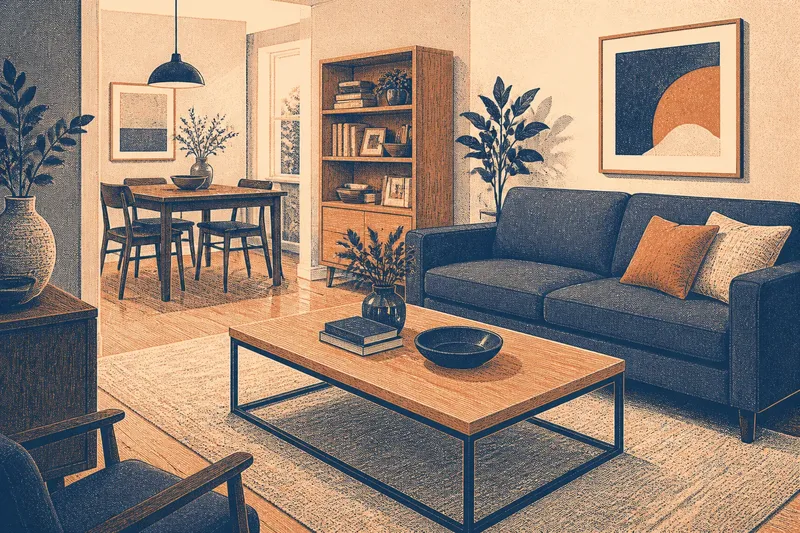
Can a matching furniture set make a room feel finished without making every piece look alike? A matching furniture set can bring welcome order, especially when a room feels scattered, but it is one route to cohesion rather than the only reliable one.
Imagine Maya has moved into a living room with a walnut dining table, a honey-oak bookcase, and a charcoal upholstered sofa. She likes the catalog’s matching walnut coffee and side tables, but wonders whether repeating the dining table’s dark finish will help the room or make it feel too uniform. She compares what the set would add with the qualities already present.
When matching helps
A coordinated set can give a room a clear visual anchor. Repeating a finish or profile may help furnishings feel orderly when the room has few established connections, or when a collection’s shape and material suit the space. Matching is not a design mistake; it becomes limiting only when it is treated as the sole way to make a room feel coherent.
In Maya’s room, the dining table has a dark, warm surface and straight legs. The bookcase is lighter, with visible grain and a slightly rustic edge. The sofa is broad and low, with squared arms. A matching table could make sense if she wants to strengthen the walnut as an anchor. But the catalog pairing would also repeat a dark finish and crisp form already visible in the room.
Matching furniture set alternatives
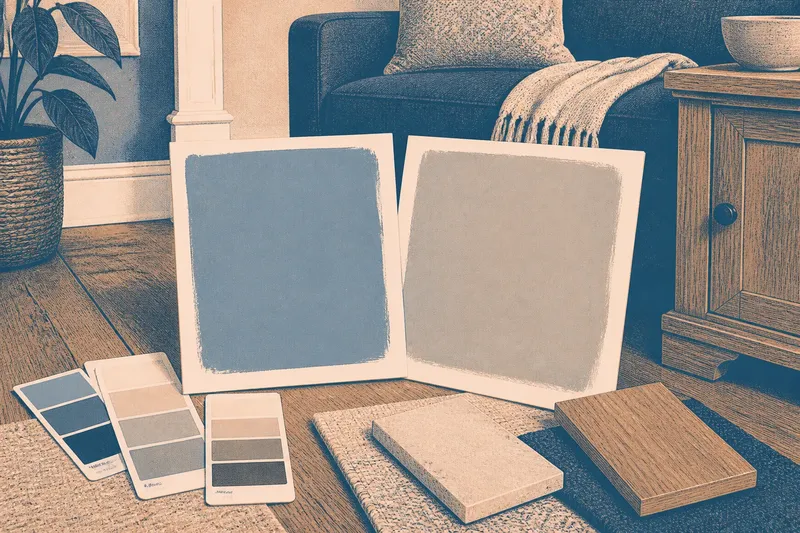
Instead of asking whether every piece matches, Maya looks for qualities that can link unlike furnishings. She notices that the sofa’s charcoal fabric and the dining table’s dark wood both carry visual weight. The bookcase’s pale grain keeps that weight from taking over. These observations suggest possible connections without requiring every wood tone to be identical.
- Silhouette: If the sofa has softened edges, a rounded table could echo them; if the room already has many curves, choose a more angular form to add contrast.
- Finish: If two woods differ in color but both have quiet matte surfaces and visible grain, keep them; if one has a conspicuously glossy finish, consider a different piece or repeat that sheen elsewhere.
- Scale: If a table looks slight beside a broad sofa, choose a top with more visual presence; if the table dominates the seating, look for a lighter or more open form.
- Visual weight: If a dark piece relates to the sofa but appears too solid, favor an open base; if the room already feels visually light, a more substantial form may provide balance.
- Material: If a metal base connects to existing dark accents, it can help a different wood top belong; if the room has no such accents, introduce the metal elsewhere or choose another material.
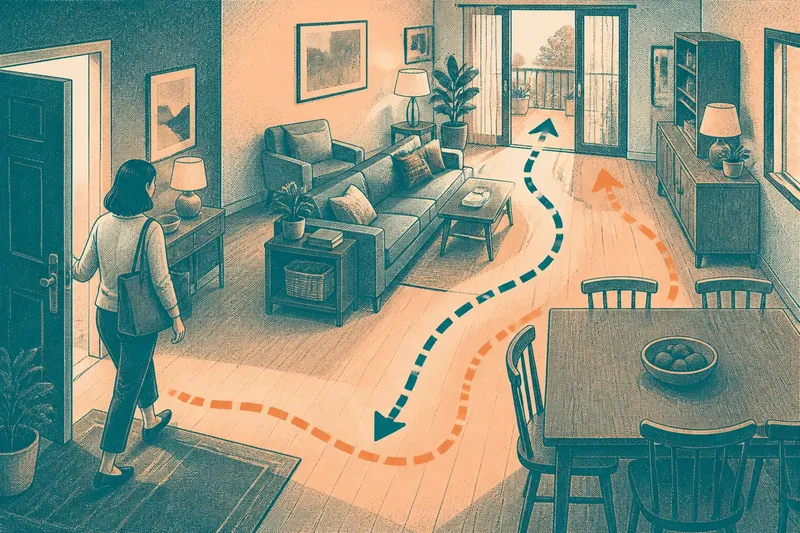
- Placement: If a piece works from the doorway and the seating area, keep it in consideration; if it clashes from a main viewpoint, change its finish, shape, or position.
Think of the furnishings like words in a sentence: repeated qualities give the room a subject, while variation keeps every piece from saying the same thing.
Compare the table options
Maya compares two choices: a walnut coffee table that closely matches the dining table, and a table with a warm, muted oak top and dark metal base. From the doorway, the walnut option would repeat the darker wood in one sightline. The mixed-material option would relate its lighter top to the bookcase and its dark base to the sofa.
She checks both options from the sofa as well. The very thin top on one design looks slight beside the sofa’s broad arms, so she sets it aside. She favors a table with a more substantial top and an open base: it keeps the room’s contrast while holding its own beside the sofa.
Say Maya’s hypothetical room has the walnut dining table, honey-oak bookcase, charcoal sofa, and space for one coffee table. She first identifies the dark wood, lighter grain, and dark upholstery already in view. Next, she places the matching walnut option and the oak-and-metal option in the same doorway sightline; the matching choice repeats the dining table, while the mixed choice links the bookcase and sofa. She then compares their visual weight from the sofa and rules out the thin-topped design. Her resulting choice is the oak-and-metal table with a substantial top—not because mixing is automatically better, but because it connects to two existing pieces without adding another strong repetition.
Make contrasts look intentional
Different wood tones do not need to be treated as a problem. Maya keeps the bookcase lighter than the dining table and avoids adding a third finish that almost matches one while clashing with the other. The coffee table’s oak reads as a distinct choice, while its warmth and grain relate to the bookcase.
A close but imperfect match can look accidental; a clear difference can look deliberate when another quality connects the pieces. In this room, the dark base relates to the sofa. Elsewhere, a shared curved profile, upholstery texture, or metal finish might provide that link. Not every quality needs to match: a table can share the sofa’s visual weight while differing in shape, or relate to the bookcase’s wood while introducing a new leg profile.
Questions about furniture sets?
Do all wood furniture pieces need to match?
No. Different wood tones can work together when grain, sheen, undertone, or nearby materials establish a connection. A clearly different finish may look more deliberate than a close imitation that does not quite align.
When is a matching set a good choice?
A set can help when a room needs a strong anchor or a simple, coordinated foundation. Check that its scale and style suit the room, and leave room for other furnishings to add contrast if the collection feels too uniform.
What should connect furniture if the finishes differ?
Look for a shared quality such as silhouette, visual weight, texture, or metal finish. If no connection is visible from the room’s main viewpoints, change the piece, its placement, or the surrounding accents.
Can a matching set still feel personal?
Yes. A coordinated set can provide order while distinct upholstery, lighting, art, or an accent piece adds variation. Let the set support the room rather than dictate every choice.
Before buying a matching furniture set, compare it with the furnishings already in the room and decide what you want repetition to accomplish. The search phrase matching furniture set describes one useful option, not a rule: choose the set when its repetition solves a real design need, and choose contrasting pieces when their shared qualities make a more convincing connection.